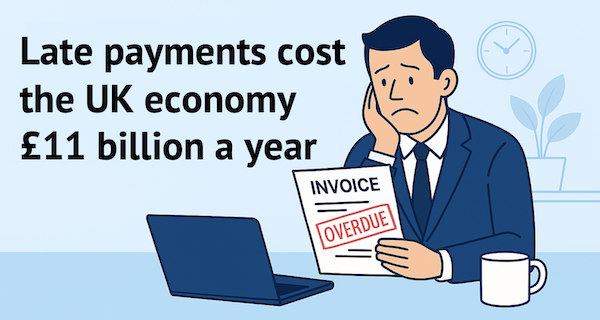
Late payments have long been one of the biggest challenges facing small businesses. The UK Government is now launching reforms – described as the “toughest crackdown on late payments in over 25 years” – designed to ensure SMEs are paid on time.
For businesses that rely on healthy cashflow to hire staff, invest and grow, these changes could be transformative. Read on to find out more about the new measures and why they matter.
The Government’s new plan, titled Time to Pay Up, introduces “the toughest laws on late payments in the G7”. The aim is simple: if an SME has delivered goods or services, it should be paid promptly, reliably and without the need to chase overdue invoices for months on end.
According to the Government:
- Late payments cost the UK economy £11 billion every year
- 38 businesses shut down every single day because they are not paid on time
As part of the reforms, the Small Business Commissioner will receive significantly expanded authority to intervene when large firms fail to pay their smaller suppliers on time. New powers include:
- Investigating poor payment practices
- Adjudicating disputes between firms
- Issuing fines worth tens of millions of pounds to persistent offenders
To speed up payments and remove ambiguity, the reforms will introduce:
A 60‑day cap on payment terms: all large firms will be legally required to pay invoices from smaller suppliers within 60 days.
Mandatory interest on late payments: all commercial contracts must now include statutory interest of 8% above the Bank of England base rate.
For example: if a small business is owed £10,000 and is paid 60 days later than the agreed payment date, they would be owed a total of £10,293.15, including interest and the £100 statutory compensation.
By tightening payment laws and giving regulators more power, the Government aims to:
- Improve cashflow for small businesses
- Reduce avoidable business closures
- Free up time spent chasing late invoices
- Strengthen trust and fairness across supply chains
When small businesses thrive, so does the wider UK economy. Improved payment reliability helps firms reinvest, take on new opportunities and plan with confidence.
At LendingCrowd, we know that even with tougher legislation, late payments can still create cashflow challenges. If your business is waiting for invoices to be paid – or looking to invest, hire or expand – we’re here to help.
LendingCrowd can provide fast and affordable business loans of between £75,000 and £500,000 to help eligible British SMEs thrive.
It takes just minutes to apply for a LendingCrowd business loan – start your journey today.
Article author